




How To Use Theragun Percussive Therapy for Swimming Warm-ups and Recovery
Published:
Expert contributor: Dr. Emily Munn, Therabody Scientist and Master’s Swimmer
While swimming is a full-body workout, it places unique demands on the shoulders. Every stroke requires your arms to repeatedly reach overhead, rotate, pull through the water, and recover again. It’s estimated that across an entire week of swim training, each shoulder rotates roughly 30,000 times. [1]
Over time, that repetitive movement can leave your shoulders feeling tight, fatigued, and less ready for the next session.
So, how can you prevent this tightness (and recover from it)? Recreational and competitive swimmers alike should prioritize a proper pre- and post-swim routine, says Therabody® scientist and Master’s swimmer Emily Munn, PhD.
Here’s why the shoulder should be a focus of your swimming warm-up and recovery, what a thorough routine looks like, and where a Theragun® helps support.

Why do swimmers need to pay extra attention to their shoulders?
The lats, chest, and deltoids generate much of the power during swim strokes, but smaller stabilizing muscles of the rotator cuff also work continuously to help maintain efficient movement. The upper traps and rear shoulders also help support arm recovery and posture, making them common areas where swimmers notice tightness after long sessions. [1]
Because swimming requires the shoulder to move through such a large range of motion, maintaining mobility is just as important as building strength. As muscles become fatigued or get tight, it can be harder to move comfortably through each phase of the stroke. [1] That's why many swimmers incorporate dynamic mobility exercises before a workout and recovery strategies afterward to help their shoulders stay loose, move well, and feel ready for the next swim.
“Whether you're charging through surf or diving into a pool lane, a pre-workout routine bridges the gap between sitting on land and executing in the water. It ensures your shoulders are primed, your core is engaged, and your body is ready to catch water from Lap 1 — rather than wasting the first 1,000 meters trying to loosen up,” says Munn.
“On the back end, post-swim recovery is what dictates how well you perform tomorrow. Preventing injury just keeps you healthy, but actively preparing your muscles before you jump in and restoring them when you get out is what allows you to hold technique, sustain high volume, and actually swim faster,” she emphasizes.
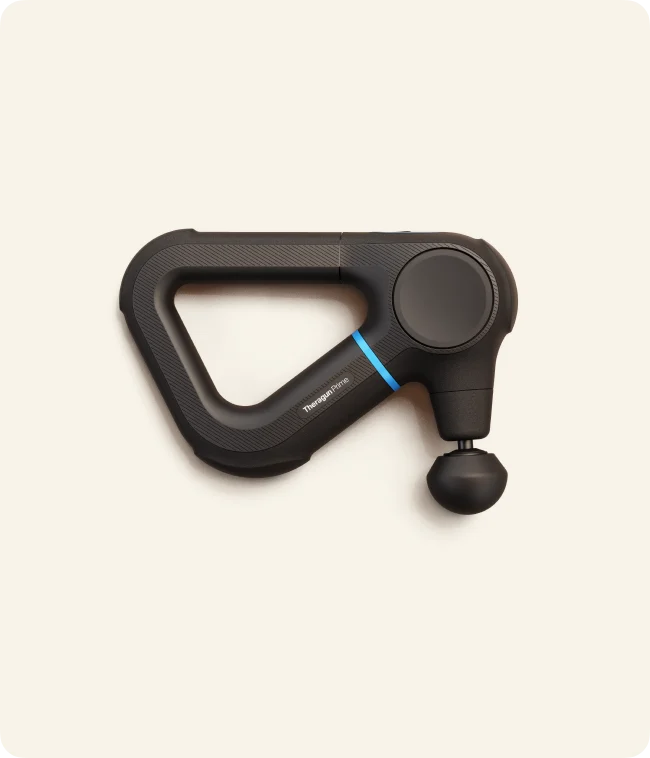
One recovery tool many swimmers are adding to both their warm-up and cooldown routines is percussive therapy, the treatment used in massage guns. Used before training, it can help prepare muscles for movement. After swimming, it can help reduce feelings of soreness and support recovery between sessions.

What does a pre-swim routine look like?
A pre-swim routine should prioritize light movement and dynamic stretching, so your joints can move through the full range of motion you need. (Static stretching is best utilized post-workout).
Dynamic stretching raises muscle temperature, increases blood flow, activates stabilizing muscles, and improves overall range of motion. [4, 5] These include movements like arm circles, shoulder rolls, cat-cow, and thoracic rotations.
In competitive swimming, research suggests that combining a moderate-intensity in-water warm-up with dryland exercises is an effective strategy for maintaining muscle activity and body temperature during the transition before competition. [6]
Here’s what that can look like, using the RAMP Framework:
- Raise: Increase body temperature and blood flow with a few minutes of light movement, like brisk walking or easy cardio. Using the Theragun for a quick massage can also help get blood flowing in targeted areas. [7]
- Activate & mobilize: Perform dynamic stretches and activation exercises (like arm circles, shoulder rolls, thoracic rotations, and resistance band exercises) to prepare your shoulders for repeated overhead motion.
- Potentiate: Finish with a few swim-specific movements in or out of the water (such as resistance band pulls, quick arm drives).
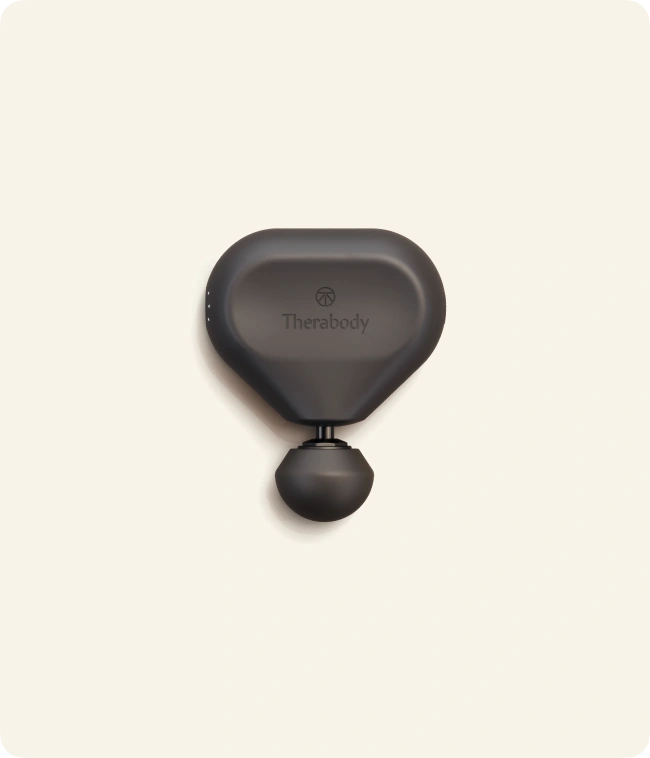
What does this look like in practice? “My pre-pool routine always starts with dynamic mobility like arm swings to wake up the muscles,” says Munn. “The Theragun Mini is what takes it to the next level. It serves as a great reminder to focus on all those smaller stabilizing muscles — like the muscles of the rotator cuff — that traditional swings might miss. Spending just a couple of minutes priming those key areas gets my shoulders fully fired up, loose, and ready to handle the yardage before I even dip a toe in the water.”
What does a post-swim routine look like?
Taking a few minutes to recover while your muscles are still warm can help reduce feelings of soreness and prepare your body for your next workout. This can include:
- Using a massage gun: Spend 30 to 60 seconds on each of the muscles that worked hardest during your swim, including the lats, chest, rear shoulders, upper traps, and muscles surrounding the shoulder blade. This can help reduce post-exercise muscle soreness and relieve lingering tightness.
- Follow with static stretching: Unlike dynamic stretches, static stretches are best saved for after your workout, when your muscles are warm. [8]
- Prioritize the fundamentals: Hydrate, refuel with carbohydrates and protein, and aim for quality sleep to support muscle recovery and prepare for your next session.
Your recovery routine may take different forms depending on your training.
“It definitely scales with my training load, but the key for me is consistency,” says Munn. “On heavy training days, I’ll launch the Therabody app right in the locker room and run through the guided "Swim Recovery' routine to immediately flush out my shoulders, lats, and quads while the muscles are still warm.”
Recovery also extends beyond the end of a workout. “On a daily basis, though, my anchor habit is spending at least 10 minutes with the Theragun right before bed. It allows me to target specific knots, release lingering tension from the day's yards, and wind down mentally. Combining immediate post-pool treatment with that bedtime routine makes a massive difference in how fresh I feel when I jump back in the water the next morning.”

Q & A with Munn
What have you found most helpful for keeping your shoulders feeling ready and recovered during heavier training blocks?
When I was training for a 10k open water race last year, I hit my highest weekly yardage since my college swimming days at Auburn. Training at that level in my 30s required a major shift in mindset: I had to learn to fuel properly and actively recover.
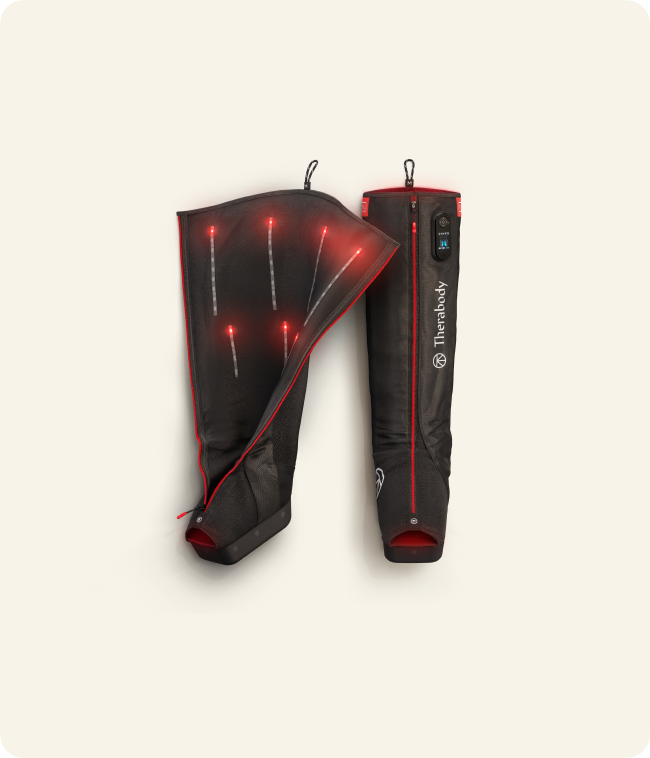
It wasn't enough to just sit on the couch after a heavy session. I built dedicated recovery routines into my schedule. I used my Theragun to release tension in my shoulders and upper body after workouts, and I paired that with JetBoots® to flush out my legs — an area swimmers frequently overlook, but one that takes a beating in heavy training cycles. Taking those extra 20 to 30 minutes each day helped keep me injury-free and allowed me to absorb that volume without breaking down.
Why is Theragun Mini particularly useful for swimmers?
Theragun Mini is an absolute game-changer for open water racing. Unlike pool meets, open water events rarely give you dedicated water time to warm up before the horn goes off. You’re often jumping straight off a beach or boat into cold water at race pace.
By pairing the Mini with the Therabody app, I can run through targeted dryland routines right on the shore to activate my shoulders, arms, and quads, so my muscles are warm and firing before I even touch the water. Plus, because open water races rely on drop bags — much like a marathon — its compact size, light weight, and durability make it easy to pack without adding bulk. It gives me a reliable warm-up routine no matter where I’m racing in the world.
Why is Theragun Mini particularly useful for swimmers?
Theragun Mini is an absolute game-changer for open water racing. Unlike pool meets, open water events rarely give you dedicated water time to warm up before the horn goes off. You’re often jumping straight off a beach or boat into cold water at race pace.
By pairing the Mini with the Therabody app, I can run through targeted dryland routines right on the shore to activate my shoulders, arms, and quads, so my muscles are warm and firing before I even touch the water. Plus, because open water races rely on drop bags — much like a marathon — its compact size, light weight, and durability make it easy to pack without adding bulk. It gives me a reliable warm-up routine no matter where I’m racing in the world.
Key takeaways
- Swimming places repetitive demands on the shoulders, making a consistent pre- and post-swim routine essential for maintaining mobility, reducing soreness, and supporting performance.
- Using a massage gun before swimming may help increase blood flow, improve shoulder range of motion, and prepare the muscles that power and stabilize each stroke.
- For best results, target the lats, chest, rear shoulders, rotator cuff muscles, and upper back — not the shoulder joint itself — with 30 to 60 seconds of percussive therapy per muscle group.
- After swimming, combine percussive therapy with static stretching, hydration, proper nutrition, and sleep to support recovery and help your shoulders feel ready for the next workout.
References:
- Biomechanical Considerations in the Competitive Swimmer’s Shoulder
- The Effect Of Percussive Therapy On Musculoskeletal Performance And Experiences Of Pain: A Systematic Literature Review
- Effect of percussive massage treatment and static stretching on muscle tone, stiffness, and strength recovery after exercise-induced muscle fatigue: A randomized controlled study
- A review of the acute effects of static and dynamic stretching on performance
- Acute effects of muscle stretching on physical performance, range of motion, and injury incidence in healthy active individuals: a systematic review
- Swimming Warm-Up and Beyond: Dryland Protocols and Their Related Mechanisms-A Scoping Review
- Comparison of Interventional Strategies to Improve Recovery after Eccentric Exercise-Induced Muscle Fatigue
- A review of the acute effects of static and dynamic stretching on performance


Related products
-
 Sold out Sale
 -
 Sold out Sale


