




Which Is Better For Recovery: Cold Water Immersion or Using a Theragun? A First of It’s Kind Study Aims to Answer the Question
Published:
Last updated:
Cold plunging after a workout or reaching for your massage gun (which conveniently fits in your gym bag) are common post-workout recovery strategies. But which is better?
A novel study, conducted by researchers out of the University of Trieste in Italy looked at how these two recovery methods — cold water immersion (CWI) and percussive massage therapy (PMT), delivered by a Theragun ® massage gun — stack up against each other and passive recovery following a fatiguing workout. [1]
Overall, both cold water immersion and percussive massage therapy significantly relieved perceptions of muscle soreness, but only percussive massage therapy increased isometric strength after fatigue. Let’s take a deeper dive into the study to understand how these findings can be used to aid your own recovery.

About the study
The goal of this study was to see how three different recovery methods, cold water immersion, percussive massage therapy, and passive recovery impact neuromuscular measures. Isometric knee extension (IKE) and flexion (IKF) and tensiomyography (TMG) were assessed. Muscle soreness and fatigue were scored from 0 to 10.
These assessments show how well the nervous system and muscles work together. When they’re well-synced, performance, fatigue, and recovery are typically better. [2]
Researchers recruited 16 male soccer players aged 20-27 to participate in a 3-week trial. The study had a randomized crossover design, meaning each participant completed each of the three interventions in a randomly assigned order. Each week, participants underwent a fatiguing workout and immediately completed one recovery method. Neuromuscular assessments were taken right after the recovery method and then again 24 hours later.
- The exercise: Participants in this study were well-trained athletes, and the study workout was designed to match their fitness levels and elicit fatigue and soreness of the lower body. They started with a Yo-Yo Intermittent Endurance Test- Level 2 (a challenging running workout) followed by 3 x 10 squat jumps and a 30-second wall sit.
At the end of three weeks, every participant had completed each form of recovery:
- Cold water immersion: During this 12-minute recovery, participants got in a portable tub with circulating cold water (that reached up to their hips) at 50 degrees Fahrenheit (or 10 degrees Celsius).
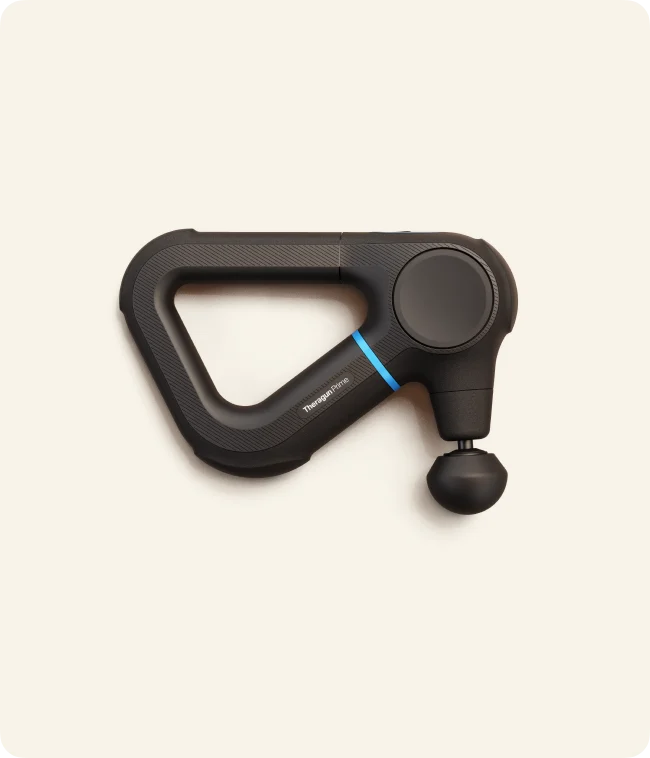
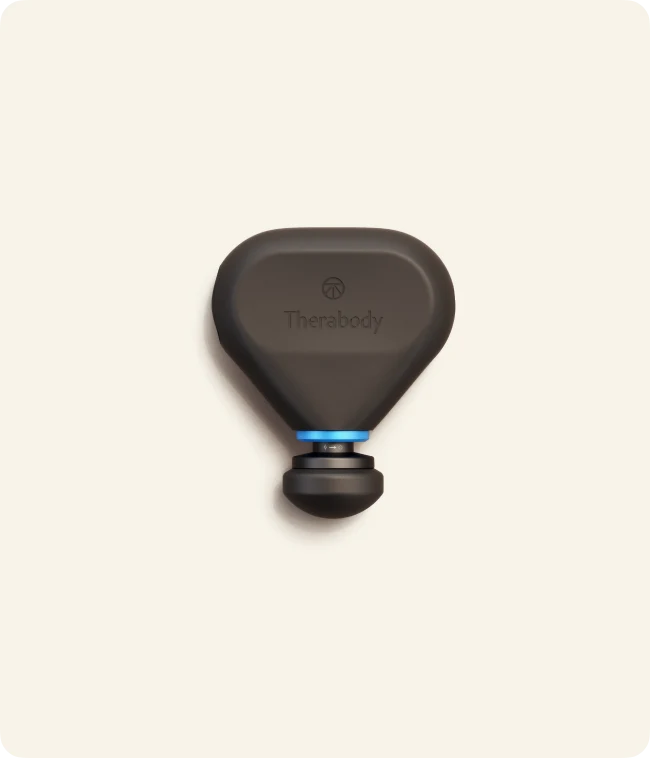
- Percussive massage therapy: For this treatment, participants used Theragun percussive therapy on the top and bottom of each thigh for three minutes each (for a total of 12 minutes).
- Passive recovery: Participants rested on a chair for 12 minutes.

Both cold water immersion and percussive massage therapy improve muscle soreness
Results showed that cold water immersion and percussive massage therapy significantly improved perceived muscle soreness, building on prior evidence.
- Cold water immersion and muscle soreness: Cold water immersion is studied for its ability to reduce muscle pain, swelling, and inflammation post-workout. It constricts blood flow, decreasing swelling and the soreness that goes along with it. [3]
- Percussive massage therapy and muscle soreness: Percussive therapy uses rapid and repetitive pressure (combining compression and vibration) to stimulate blood flow — aiding recovery and minimizing soreness. It also stimulates the release of endorphins, the body’s natural painkillers, to provide immediate relief to achy muscles. [4]
What does this mean for you? Whether you’re an elite athlete, a fitness enthusiast, or someone who exercises recreationally, cold water immersion and percussive massage therapy can help mitigate soreness from a tough workout. A Theragun may be more accessible (and enjoyable) to use. If you opt for cold water immersion, remember you don’t have to go freezing cold — you should safely build up your tolerance to colder temperatures and longer durations over time.
Only Theragun percussive massage therapy increased muscular strength
Isometric muscular strength of the quadriceps, measured by a knee extension test, improved following percussive massage therapy use. Theragun delivered this benefit right away and 24 hours later. In contrast, cold water immersion showed no change in isometric strength.
- Percussive massage therapy and strength: This is one of the first studies to directly measure how percussive massage therapy supports lower body strength in humans. However, percussive massage has been shown to increase blood flow, reduce muscle stiffness, and alleviate muscle pain, all of which support recovery and create an environment for muscles to perform at a higher capacity. [4]
What does this mean for you? If you exercise or train multiple times a day, percussive massage therapy can immediately affect your isometric strength. This type of strength occurs when you apply voluntary force to a muscle and hold it still. For athletes, this therapy can be used to boost strength immediately following your workout and over a 24-hour period. This is especially important for those looking to enhance training effectiveness or improve performance during competitions.

Cold water immersion’s impact on muscle stiffness remains unclear (and may hinder performance)
Researchers also investigated the impact of these recovery tactics on muscle stiffness. They did this with an assessment called tensiomyography, which measures muscle contraction. A shorter contraction time is more favorable. Longer contraction times can indicate that the muscles are taking more time to respond and generate force, indicating reduced neuromuscular efficiency or fatigue.
When participants engaged in cold water immersion after their workouts, researchers found a significant increase in contraction time. The effects were temporary and diminished by the 24-hour mark. Previous studies indicate this treatment may increase muscle stiffness in the moment (due to muscle displacement). [5]
Percussive massage therapy did not have a significant impact on muscle contraction in this study.
What does this mean for you? Decreased muscle temperature is linked to increased muscle stiffness, so if you consistently deal with stiff muscles, regular cold water immersion likely won’t be the best treatment for you. [5]
Keep this in mind
Although this study's findings are exciting, it’s important to note that the results are likely only generalizable to well-trained male athletes. Future studies that include additional groups like women, older adults, and generally active individuals may provide more context into the effectiveness of these therapies.
Key takeaways
- Researchers of a newly published study investigated the impact of cold water immersion, percussive massage therapy, and passive recovery on measures of muscle strength, soreness, and stiffness in trained male soccer players.
- Both cold water immersion and percussive massage therapy improved perceived soreness in participants.
- Only percussive massage therapy significantly improved isometric strength.
- Athletes and highly active individuals may benefit from adding one of these recovery tools to their post-workout routine.
- A massage gun is (likely) the most accessible option for strength and recovery.
References
- The Acute Effects of Cold Water Immersion and Percussive Massage Therapy on Neuromuscular Properties and Muscle Soreness after Exercise in Young Male Soccer Players
- Electrical stimulation for investigating and improving neuromuscular function : Historical perspective and major advances
- Effects of cold water immersion after exercise on fatigue recovery and exercise performance--meta analysis
- The Effect Of Percussive Therapy On Musculoskeletal Performance And Experiences Of Pain: A Systematic Literature Review
- Cryotherapy induces an increase in muscle stiffness
- The Effect Of Percussive Therapy On Musculoskeletal Performance And Experiences Of Pain: A Systematic Literature Review


Related products
-
 Sold out Sale
 -
 Sold out Sale
 -

 Sold out Sale
 -
 Sold out Sale


