



A Runner’s Guide to Tools That Help You Recover Faster
Authors: Therabody Scientists: Tim Roberts, MSc; Kyle Silvey, PhD; Michelle Darian, MS, MPH, RD, LDN; Rachelle Reed, PhD, MS, ACSM-EP
Running isn’t just a sport or a form of exercise for people. It’s a lifestyle. It’s a mental break. And just like fitting in a run (no matter the length or pace) is an important part of your routine, building in the time to recover is critical to keep you running. Recovery is essential for continuing to improve running performance — and it can reduce your risk of developing a sports injury that can keep you out of the running game for quite some time.
But recovery doesn’t mean doing nothing. Recovery is an active and dynamic process. There are steps you can take — and technology you can use — to help support and expedite your body’s internal recovery processes. This means that you’re able to hit the pavement, trails, or track sooner, with more energy and with lower risk of injury.
Here’s what you need to know about recovering from your runs, common signs of poor recovery, innovative modalities to address those concerns, and how to use Therabody’s® technology to maximize recovery.
What does running recovery mean?
Running strains the body, mind, muscles, heart, and lungs. During and after a run, your heart rate increases, blood pressure rises, and energy stores deplete. [1, 2]
It also stresses your body. It’s a repetitive movement — you perform the same motions over and over again for miles. Each time you strike the ground, your foot and leg absorb more than your body weight’s worth of pressure. As a result, your muscle fibers experience some tearing and stretching from the movements. [1, 2]
Runners know quite well the feelings of muscle soreness, tension, and stiffness that can accompany a tough workout. Like clockwork, your quads ache, your calves are tight, and you start to question if your soreness is snowballing into pain.
To properly recover from running, it’s important to keep blood circulating. This is why going for a walk or doing a yoga flow can help to shake out sore muscles. Improved blood circulation delivers muscles more oxygen and nutrient-rich blood. In doing so, sensations of stiffness and soreness can start to improve.
Proper recovery means that everything mental and physical that shifted during exercise is balanced before your next workout. With the right recovery time and tools, reducing inflammation, stiffness, and soreness is expedited so you can return to the course faster and stronger. [3, 4]

Why is it important for runners to recover?
Here are three benefits runners experience when they prioritize recovery:
Reduce the risk of common running injuries: Proper recovery doesn’t necessarily mean you won’t sustain an injury like rolling an ankle on uneven pavement — but it can help prevent overuse injuries like shin splints, stress fractures, Achilles tendonitis, plantar fasciitis, and runner’s knee (patellofemoral pain syndrome). One study estimated that up to 70% of runners are subject to a preventable overuse injury each year. [5]
Prevent overtraining: While feeling sore after a run is common, excessive training without adequate recovery can lead to overtraining syndrome. Overtraining can affect more than just your muscles; it can impact your mental health, mood, hormones, and immune health and can lead to overuse injuries. [6, 7]
Improve performance: Being relatively free of injuries, soreness, fatigue and being mentally sharp ultimately boosts your overall running performance. In fact, a 2022 study of 264 endurance athletes found that the top three finishers used more recovery strategies than those who placed below them. [8]
What technology can runners use to recover?
There are several common ailments — like muscle soreness, acute pain, joint stiffness, swelling, and delayed onset muscle soreness — that runners experience that may prevent them from running as hard or as often as they want. Research shows that technology effectively targets these specific concerns, expediting recovery.
Heat, cold, and vibration therapy help treat sore muscles
Heat and cold therapy as well as vibration therapy help to provide therapeutic benefits to stiff, sore, and pained muscles that runners often experience.
How it works:
Heat therapy can help to alleviate muscle soreness and stiffness. It increases blood flow — clearing out waste products in the blood that result from strenuous exercise. [9]
Cold therapy can help with acute pain (like a rolled ankle) by reducing swelling and inflammation from forming. [10]
Contrast therapy (alternating back and forth between heat and cold) helps to maximize recovery from strenuous exercise when muscles and joints tend to be stiff and sore. [11]
Vibration therapy provides a gentle massage that increases circulation and relaxation and reduces tension and pain, making it effective for sensitive areas like joints or sore muscles. Studies show vibration therapy reduces delayed onset muscle soreness (DOMS) when used before or after a tough workout by decreasing pain, stiffness, and swelling. [12]
Devices that can help:
Therabody devices deliver heat, cold, and vibration therapies that target key focus areas for runners.
RecoveryTherm® Knee: This wearable device delivers heat, cold, contrast, and vibration therapy to the knees that absorb pressure during a run.
ThermBack LED: This back-wrap uses heat, vibration, and near and far infrared LED light to offer pain relief to the lower back.
RecoveryTherm Cube: This device offers local heat, cold, and contrast therapy that can be applied anywhere that needs extra relief.
RecoveryPulse Calf: Delivering vibration therapy directly to the calf muscle, this device provides targeted pain and tension relief.
Pro tips:
- Before a run: Use heat and vibration therapy for 5-10 minutes to prepare your muscles to hit the road.
- After a run: Use cold therapy on achy areas post-run. Apply 20 minutes of cold therapy every hour to help reduce inflammation and swelling. Still feeling sore from a recent hill workout? Using heat and vibration before your next run can help prep your legs.
- Maximize running recovery: After a workout, use contrast therapy spending three minutes using heat, one minute using cold, alternating between the two for 15-30 minutes.

Percussive and infrared LED light therapy help improve circulation
Percussive and infrared LED light therapy help to increase blood flow, which can decrease muscle tension.
How it works:
Percussive therapy uses pressure and vibration to increase blood flow and oxygen delivery, which can help reduce muscle tension. [13, 14] When used before exercise, it can help reduce DOMS and decrease the sensitivity to DOMS post-exercise. [15, 16] Percussive therapy can also decrease pain experienced. Treating muscles around those experiencing pain can help relieve tension, ultimately reducing pain in the adjacent area. [17, 18]
Infrared LED light therapy can increase collagen content, improving joint strength. This can help to alleviate joint pain that runners often experience. When applied near the skin, infrared light creates a warming sensation on the skin. It can improve blood circulation, promote injury healing, and help alleviate pain. [19, 20]
Devices that can help:
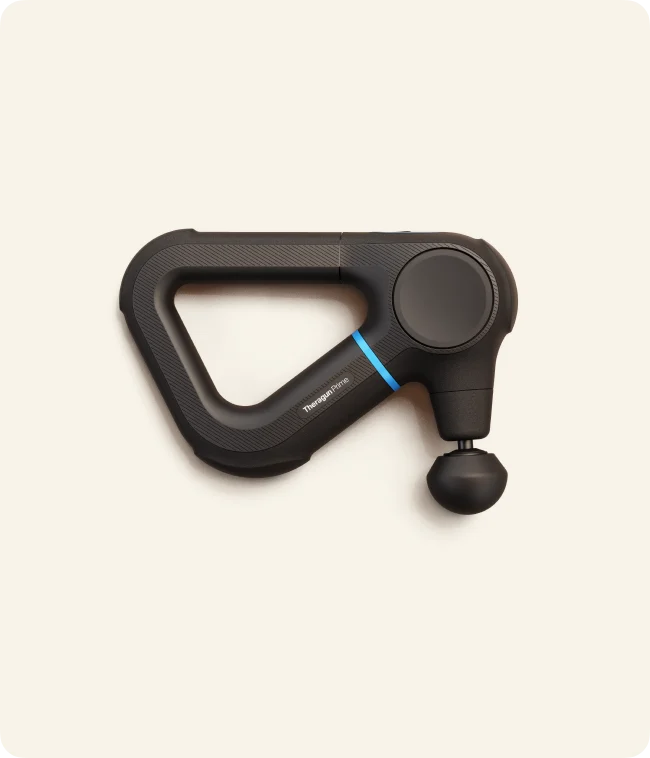
Theragun® devices deliver percussive therapy to help expedite recovery. For targeted percussive therapy combined with heat and infrared light therapy, reach for the Theragun PRO Plus.
Pro tips:
- Loosen up before a run: Use the Theragun in-app Pre-Run Warm-Up routine for 5-10 minutes before a run, targeting the bottom of your feet, calves, hamstrings, glutes, quadriceps, IT band, and hips for 30 seconds each.
- Spend more time on each muscle after a run: Use the Run Recovery in-app routines for various run distances. Spending more time on each muscle group, apply percussive therapy for up to two minutes per muscle on the glutes, arches of feet, IT bands, quads, hamstrings, calves, shins, and hips, and other muscles that are particularly stiff or sore.

Pneumatic compression helps alleviate stiffness and soreness
Pneumatic compression stimulates blood flow to help reduce muscle stiffness and soreness.
How it works:
Pneumatic compression mimics the physiological action of the heart, helping to move blood through the veins toward the heart. This is an essential step for moving waste products (and carbon dioxide) away from tissues, which otherwise can make limbs feel stiff and sore. Pneumatic compression is best known for its muscle recovery benefits, including decreasing swelling from running and alleviating sore and stiff muscles. It can also improve cardiovascular recovery (such as blood pressure, cardiac output, and vascular resistance) to a pre-exercised state. [21, 22]
Devices that can help:
To experience targeted pneumatic compression, try Therabody’s JetBoots®. Options like JetBoots Prime solely deliver pneumatic compression, while JetBoots PRO Plus combines pneumatic compression with heat, vibration, and LED light therapy.
Pro tips:
- Prepare for tomorrow’s run: Use JetBoots for 20-40 minutes the night before a long run for fresh legs the next day.
- Morning of run: On days you’re particularly sore, use the JetBoots Pre-Run Refresh routine before heading into a run.
- Post-run recovery: After a hard run, throw on the boots for 40-60 minutes to kick off the recovery process.

Cupping therapy helps relieve pain
Cupping therapy uses suction to provide pain relief to specific spots on the body. This therapy is popular among runners since it can be done at home for instant recovery.
How it works:
Research shows cupping offers several benefits of interest to runners. It can relax muscles, reduce perceived pain (even more so than over-the-counter medications), and trigger the release of natural pain-relieving compounds in the brain. Cupping gives runners a way to find instant relief after tough workouts or races. [23, 24]
Devices that can help:
TheraCup makes it easy for runners to experience the benefits of cupping therapy anytime. It combines suction, heat, and vibration to target sore spots and accelerate recovery. This cupping device is the ideal tool for runners to enhance relaxation, relieve tightness, and get back to running their best.
Pro tip:
- Recover after a run: Use TheraCup on areas that are particularly stiff and sore, like calves, quads, and hamstrings. Apply lotion and then gently glide the TheraCup across the middle of the muscle for 2-5 minutes, moving carefully around the joints to help reduce muscle stiffness and soreness.

Key takeaways
- Recovery is an ongoing, active process. Prioritizing recovery tactics before and after a run can help keep your body and mind strong and fast and reduce stress, inflammation, and soreness from your runs.
- Insufficient recovery can impair running performance and increase your risk of overtraining.
- Technology can and should be utilized to help speed recovery. Knowing how and when to use included therapies helps you to get the most out of the device (and your training).
- Heat, cold, and vibration therapy can help treat sore muscles, and percussive and infrared LED light therapy help improve circulation.
- Pneumatic compression helps alleviate stiffness and soreness while cupping helps alleviate pain.
References:
- Running Gait Analysis and Biomechanics
- Exercise Physiology
- Relationship Between Blood Flow and Performance Recovery: A Randomized, Placebo-Controlled Study
- A Systematic Review on the Effectiveness of Active Recovery Interventions on Athletic Performance of Professional-, Collegiate-, and Competitive-Level Adult Athletes
- Suspected Mechanisms in the Cause of Overuse Running Injuries
- Overtraining Syndrome: A Practical Guide
- Musculoskeletal adaptations and injuries due to overtraining
- Recovery Strategies in Endurance Athletes
- Mechanisms and modifiers of reflex induced cutaneous vasodilation and vasoconstriction in humans
- Cryotherapy Reinvented: Application of Phase Change Material for Recovery in Elite Soccer
- Contrast water therapy and exercise induced muscle damage: a systematic review and meta-analysis
- Vibrations and their applications in sport. A review
- The Potential Neural Mechanisms of Acute Indirect Vibration
- Acute effects of vibration on peripheral blood flow in healthy subjects.
- Provider Logo A critical evaluation of percussion massage gun devices as a rehabilitation tool focusing on lower limb mobility: A literature review
- Does vibration benefit delayed-onset muscle soreness?: a meta-analysis and systematic review
- Comparison of Interventional Strategies to Improve Recovery after Eccentric Exercise-Induced Muscle Fatigue
- The Biomechanical Effects of Percussive Therapy Treatment on Jump Performance
- Infrared Radiation in the Management of Musculoskeletal Conditions and Chronic Pain: A Systematic Review
- Improvement of pain and disability in elderly patients with degenerative osteoarthritis of the knee treated with narrow-band light therapy/
- The effects of aging and activity on muscle blood flow
- Effects of intermittent pneumatic compression on the recovery of cardiovascular parameters after repeated sprint exercise
- New is the well-forgotten old: The use of dry cupping in musculoskeletal medicine
- The effect of moving cupping therapy on nonspecific low back pain


